“Can you send me a proposal?” That is the moment a project is won or lost. This guide gives you a free freelance proposal template to copy, explains what goes in each section and why, shows how to present the price, and offers wording for following up when a client goes quiet.
The short answer
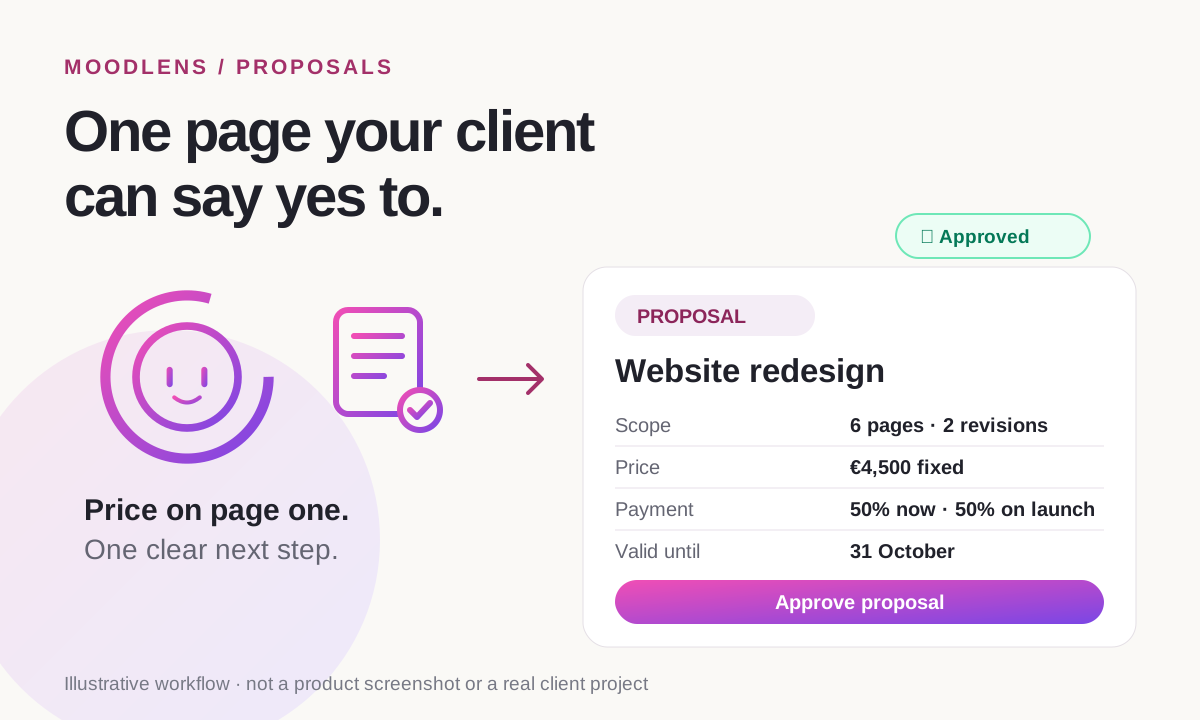
A good freelance proposal is short and specific. Open with the client’s goal in their own words, list the deliverables and what is not included, give the timeline, put the price and payment terms where the client can see them straight away, and end with one clear next step and a date the offer is valid until. Keep it short: in Proposify’s 2026 data, winning proposals averaged 11 pages and losing ones 13. Follow up within two or three days, because winning proposals in the same data closed about 2.5 days after the client first opened them. In MoodLens To-do, your client approves the proposal from a secure link after verifying their email, without creating an account, and the approval can create the contract draft for you.
From brief to approved proposal
- 1Restate the goal
- 2List the deliverables
- 3Say what is not included
- 4Show the price and options
- 5Set the payment terms
- 6Ask for one clear yes
What a proposal is for, and what it is not
A proposal turns a conversation into a decision. It tells the client what you will do, by when, for how much, and what they need to do to say yes. A good one makes saying yes the easy option.
It is not a quote, which only prices clearly defined work, and it is not a contract, which sets the legal terms both sides sign before the work starts. In practice the proposal comes between the two: it wins the work, and its agreed terms then go into the contract.
| Document | What it does | When you send it |
|---|---|---|
| Quote or estimate | Prices work that is already clearly defined | When the client knows exactly what they want |
| Proposal | Explains the approach, scope, timeline and price, and asks for a decision | After the first conversation, while interest is high |
| Contract | Sets the legal terms: payment, ownership, changes and cancellation | After the proposal is approved, before any work starts |
What goes in a freelance proposal
Clients skim proposals. Each section should answer one question they have, in the order they have it: do you understand what I need, what exactly do I get, what will it cost, and what do I do next?
- The goal, in the client’s words. It shows you listened, and it is what they will judge the result against.
- Deliverables you can count: “a five-page website with a contact form”, not “a new website”.
- What is not included. It is the shortest section and it prevents the most arguments.
- Timeline and milestones, including what you need from the client and by when.
- The price, with the payment terms next to it, not hidden at the end.
- A validity date, so the proposal does not stay open forever.
- One clear next step: approve by a date, then the contract follows.
| Finding | Figure | Source |
|---|---|---|
| Average close rate of proposals sent through Proposify | 34% | Proposify, State of Proposals 2026: 742,137 proposals (vendor data) |
| Industry average close rate, as reported by Proposify | 20% | Proposify 2026 |
| Average length of winning vs. losing proposals | 11 vs. 13 pages | Proposify 2026 |
| Time from the client first opening a winning proposal to the deal closing | 2.5 days on average | Proposify 2026 |
| Close rate when more than one stakeholder views the proposal | 20% higher | Proposify 2026 |
These are figures from one vendor’s customers, so treat them as direction rather than law. The pattern is still useful: shorter proposals win more often, decisions happen within days of the first read, and a proposal that reaches everyone who decides does better than one stuck in a single inbox.
Free freelance proposal template
Copy the template below and replace every bracket. It fits on one or two pages, which is the point: everything the client needs to decide is in front of them.
PROPOSAL Prepared for: [Client name, company] Prepared by: [Your name or business] Date: [Date] · Valid until: [Date, for example 14 days later] 1. Your goal [One or two sentences on what the client wants to achieve, in their words.] 2. What I will deliver - [Deliverable 1: description, format and quantity] - [Deliverable 2: description, format and quantity] - [Deliverable 3: description, format and quantity] 3. Not included - [Work that is not part of this proposal, for example copywriting, hosting or ads] - Anything not listed under "What I will deliver". 4. How we will work - [Milestone 1]: [date] - [Milestone 2]: [date] - [Number] revision rounds per deliverable are included. - From you: [content, access, feedback] by [date]. 5. Investment - [Option A, for example Essential]: [price]. [What it includes.] - [Option B, for example Recommended]: [price]. [What it includes.] Prices are [fixed / based on an hourly rate of (rate)] and exclude [VAT or other taxes, if they apply]. 6. Payment [Schedule, for example 50% to start and 50% on delivery.] Invoices are due within [number] days. 7. Next step Approve this proposal by [date]. I will then send the contract for signature, and we can start on [date]. [Your name] · [Email] · [Phone]
Keep the language plain and the numbers specific. If a line cannot be counted or dated, the client will fill the gap with their own assumptions.
A proposal describes the work and the price. The legal terms, such as late payment, ownership and cancellation, belong in the contract you send after it is approved.
How to present the price
The price is the part every client reads first, so do not make them hunt for it. Put it on the first page or right after the deliverables, with the payment schedule next to it.
- Fixed price or hourly: a fixed price is easier to approve; an hourly rate fits work that cannot be defined yet. If you charge hourly, give an estimated range.
- Two or three options: a lean option and a recommended one let the client choose how to say yes instead of whether to say yes.
- Say what each option includes, in deliverables, not adjectives.
- State whether VAT or other taxes are included.
- Ask for a deposit to start. A first payment before work begins protects your time and confirms the client is committed.
- Add a validity date. Prices and availability change, and a deadline gives the decision a natural moment.
Mistakes that get proposals ignored
Most proposals that go unanswered fail for the same few reasons:
- Too long. A dozen pages of background before the price loses busy readers.
- Vague deliverables that leave room for disagreement later.
- No list of what is not included.
- The price buried at the end, or missing the payment terms.
- No validity date and no clear next step, so the proposal sits in an inbox.
- Sending it days after the call, when interest has already cooled.
- Sending it to one person when several people decide.
What to send when the client goes quiet
Silence after a proposal rarely means no. More often the client is busy, waiting on someone else, or unsure about one detail. A short, specific follow-up helps them decide. Since winning proposals in Proposify’s data closed about 2.5 days after first being opened, a first follow-up two or three days after sending is reasonable.
| When | What to say |
|---|---|
| 2–3 days after sending | “Hi [name], did you get a chance to look at the proposal? Happy to walk you through it in 10 minutes if that helps.” |
| About a week later | “Is there anything in the proposal you’d like me to change, such as the scope, the timeline or the payment schedule?” |
| Before the validity date | “A quick note that the proposal is valid until [date]. After that I’ll need to re-check my availability for the start date.” |
| Closing the loop | “I’ll assume the timing isn’t right for now and close this on my side. If anything changes, just reply here.” |
Ask a question the client can answer in one line rather than “any thoughts?”, and if several people decide, ask who else should see the proposal.
From approved proposal to signed contract
An approved proposal tells you the client wants to go ahead. It is usually not enough on its own to protect you if something goes wrong. Payment due dates, late payment, ownership of the work and what happens if the project is cancelled belong in a contract both sides sign before the work starts.
The easiest way to get the contract signed is to send it straight after the approval, while the decision is fresh, with the agreed scope and price already filled in. The freelance contract guide includes a free template for exactly that step.
How MoodLens handles proposals
MoodLens To-do keeps the proposal next to the project it describes, so the scope and price you agree are the ones the contract, the plan and the invoice start from.
Write the proposal yourself, or let MoodLens draft it from your project or a spoken brief, then review and edit it before sending. Your client opens it from a secure link, verifies their email with a one-time code and approves it without creating an account. You can send it to more than one reviewer, and MoodLens records who approved it and when, against a fixed snapshot of the version they reviewed. You can also download the proposal as a PDF.
If you switch on the option before sending, the approval also creates a contract draft with the agreed commercial terms, ready for you to review and send for signature.
- Approving a proposal is not a signature. Use the contract for the legal terms and the signature.
- The contract-draft option is off by default for new proposals. Switch it on per proposal.
- Drafts written with AI are a starting point. Check the scope, price and dates before you send.
A proposal sent as an attachment vs. one the client approves from a link
| Category | MoodLens | PDF attachment |
|---|---|---|
| How the client says yes | Approves from a secure link after verifying their email | Replies “looks good” somewhere in a thread |
| Record of the approval | Who approved it and when | An email you have to find later |
| Which version was approved | A fixed snapshot of the version they reviewed | Whichever attachment they happened to open |
| What happens next | The approval can create the contract draft with the agreed terms | You copy the terms into a contract by hand |
| Account needed | No, a one-time code sent to their email is enough | No, but nothing is recorded either |
Frequently asked questions
How long should a freelance proposal be?
As short as it can be while still answering the client’s questions: the goal, the deliverables, what is not included, the timeline, the price and the next step. For many freelance projects that is one or two pages. In Proposify’s 2026 data, winning proposals averaged 11 pages and losing ones 13, so longer is not better even for larger deals.
What is the difference between a proposal and a quote?
A quote prices work that is already clearly defined. A proposal explains the approach, scope and timeline as well as the price, and is designed to win the work. Freelancers often send a proposal for new projects and a quote for repeat or clearly defined jobs.
Should I put the price in the proposal?
Yes. The price is the part clients read first, so make it easy to find and put the payment schedule next to it. Offering two or three options lets the client choose how to go ahead rather than whether to.
How soon should I follow up on a proposal?
Two or three days after sending is a reasonable first follow-up. Proposify’s 2026 data found that winning proposals closed about 2.5 days after the client first opened them, so a decision often happens within days.
Is an approved proposal legally binding?
It depends on the wording and the law that applies, and it usually does not cover payment terms, ownership or cancellation in enough detail. Treat the approval as the decision to go ahead, and put the legal terms in a contract both sides sign. This is general information, not legal advice.
Can my client approve a proposal in MoodLens without an account?
Yes. Your client opens the proposal from a secure link, verifies their email with a one-time code and approves it. MoodLens records who approved it and when. If you switched on the option before sending, the approval also creates a contract draft.
Related MoodLens workflows
Sources and methodology
Proposal figures come from Proposify’s State of Proposals 2026, which analyses proposals sent through Proposify, so they are vendor data. MoodLens features were checked against the product in October 2026. The template is a starting point, not legal advice.